Why the right foundation matters when starting your business
Starting a business is exciting. Getting the paperwork right is not — and it’s the part that trips up more new business owners than anything else.
Every week, we talk to passionate, hardworking people who have a great idea and no clear path to turn it into a real, legally sound business. Without the right guidance, it’s easy to spend hours (sometimes weeks) untangling questions that a little upfront knowledge could have answered in minutes.
Getting the formation process right, the first time
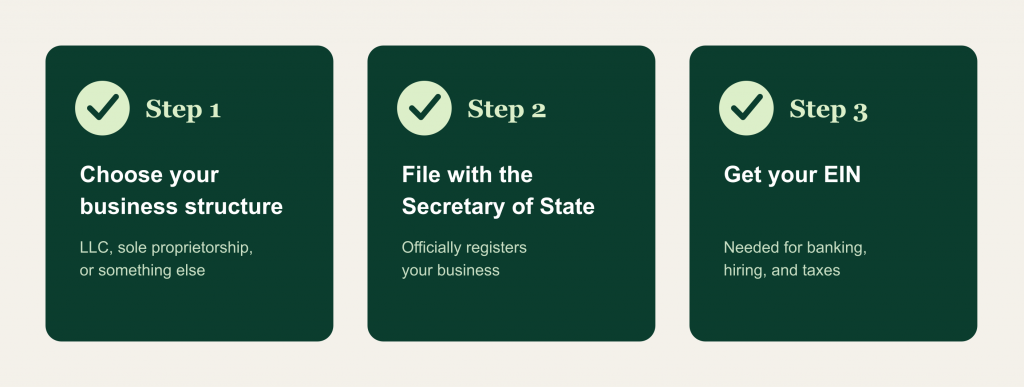
Before you can focus on the work you actually love, there are a few foundational steps every business needs:
- Choosing the right business structure — whether that’s an LLC, sole proprietorship, or something else, the right choice depends on your goals, liability concerns, and how you plan to grow.
- Filing with the Secretary of State — this officially registers your business and is a required step for LLCs and corporations in Idaho.
- Getting your EIN — your Employer Identification Number is what the IRS uses to identify your business, and you’ll need it to open a business bank account, hire employees, or file taxes.
Skipping or rushing any of these steps doesn’t just create headaches later — it can cost you real time and money down the road. And that headache doesn’t stop at formation. The same care you put into filing correctly the first time carries straight into your next decision: where you bank.
Why your banking relationship matters more than people think
A rushed or mismatched formation often leads to a rushed banking choice too — whichever bank is closest, or whichever one a form defaults to. But your banking relationship is a building block in its own right, and it’s a step people often underestimate.
A national bank isn’t automatically the right (or wrong) choice — it depends on your business. For some, a large national bank offers resources and reach that make sense from day one. For others — especially businesses built around local relationships — a community bank or credit union might serve you far better, with more personal service and more flexibility.
The right banking relationship also lays the groundwork for building business credit, which becomes essential as your business grows and needs access to funding.
Knowing which kind of institution actually fits your business can save you time, fees, and frustration — instead of guessing or going with whichever bank is most convenient. But none of these decisions, from formation to banking, mean much without a clear sense of where your business is actually headed. That’s where a business plan comes in.
A business plan turns your idea into a path forward
Here’s something we see constantly: business owners with a great idea, but no clear plan for how to actually get there.
A business plan doesn’t have to be complicated. At its core, it’s simply a way of turning “I have an idea” into “here’s exactly what I need to do, in order, to make this real.” It gives you a foundation to build on and a way to track your progress as you go — the same kind of foundation that makes formation and banking decisions easier, because you already know where you’re headed.
Let’s build your plan together
If you have a business idea but aren’t sure how to turn it into an actionable plan, that’s exactly where we come in. We’ll work with you to translate your idea into a clear, step-by-step plan — one we can track together as your business takes shape.
You focus on the work you’re passionate about. We’ll make sure the business behind it starts on solid ground.
Ready to get started? Contact us to talk through your idea and take the first step.